
详解Java容器集合框架
作者:袖梨
2026-06-16
本篇文章涵盖 ArrayList/LinkedList 源码细节、HashMap 完整原理(含红黑树、扩容、扰动函数)、Set 底层实现、迭代器 fail-fast 机制、并发容器简介、Comparable/Comparator 深入、Collections 工具类全解、Properties 详解 以及 实际开发建议。所有代码均可直接运行。
一、容器概览与设计目的
1.1 为什么需要容器(集合框架)
- 数组的局限:长度固定,只能存储同类型元素,增删操作需要手动移动元素。
- 动态管理:程序运行时无法预知需要存储多少对象(如数据库查询结果)。
- 统一操作:Java 集合框架提供统一的接口和算法,降低学习成本。
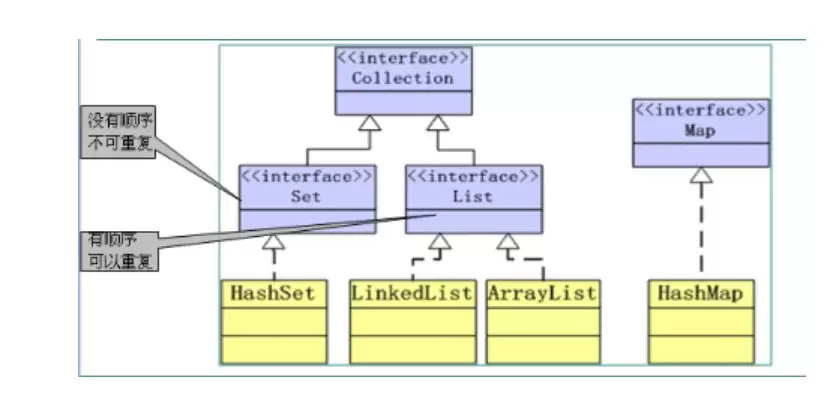
1.2 容器框架的核心接口
Iterable (根接口,提供 for-each 支持)
│
└── Collection
     ├── List
     ├── Set
     └── Queue
Map (独立分支)
Collection:单值存储。Map:键值对存储。
二、List 接口详解
2.1 ArrayList 源码核心(JDK 1.8)
2.1.1 底层结构
transient Object[] elementData;   // 存储元素的数组
private int size;                 // 实际元素个数
2.1.2 构造方法
// 无参构造:初始为空数组,第一次 add 时扩容到 10
public ArrayList() {
    this.elementData = DEFAULTCAPACITY_EMPTY_ELEMENTDATA;
}
// 指定初始容量
public ArrayList(int initialCapacity) {
    if (initialCapacity > 0) {
        this.elementData = new Object[initialCapacity];
    } else if (initialCapacity == 0) {
        this.elementData = EMPTY_ELEMENTDATA;
    } else {
        throw new IllegalArgumentException("Illegal Capacity: "+ initialCapacity);
    }
}
2.1.3 扩容机制
private void grow(int minCapacity) {
    int oldCapacity = elementData.length;
    int newCapacity = oldCapacity + (oldCapacity >> 1); // 1.5 倍
    if (newCapacity - minCapacity < 0)
        newCapacity = minCapacity;
    if (newCapacity - MAX_ARRAY_SIZE > 0)
        newCapacity = hugeCapacity(minCapacity);
    elementData = Arrays.copyOf(elementData, newCapacity);
}
- 每次扩容为原来的 1.5 倍(
oldCapacity + oldCapacity / 2)。 - 使用
Arrays.copyOf复制原数组,开销较大。 - 建议:如果能预估元素个数,使用
ArrayList(int initialCapacity)减少扩容。
2.1.4 add 和 remove 的时间复杂度
| 操作 | 时间复杂度 | 说明 |
|---|---|---|
尾部添加 add(e) | 均摊 O(1) | 偶尔扩容 O(n) |
指定位置添加 add(i, e) | O(n) | 需要移动元素 |
尾部删除 remove(size-1) | O(1) | 直接置 null |
指定位置删除 remove(i) | O(n) | 移动元素 |
随机访问 get(i) | O(1) | 数组特性 |
2.2 LinkedList 源码核心
2.2.1 底层双向链表节点
private static class Node<E> {
    E item;
    Node<E> next;
    Node<E> prev;
    Node(Node<E> prev, E element, Node<E> next) {
        this.item = element;
        this.next = next;
        this.prev = prev;
    }
}
2.2.2 关键字段
transient int size = 0;
transient Node<E> first;
transient Node<E> last;
2.2.3 插入与删除效率
- 在头部或尾部插入/删除:O(1)(
addFirst、addLast、removeFirst、removeLast)。 - 在指定位置插入/删除:需要先遍历到该位置 O(n),然后再修改前后指针 O(1)。
- 随机访问
get(index):O(n),需要通过循环或二分折半查找。
2.2.4 LinkedList 作为双端队列
实现了 Deque 接口,可当作栈、队列使用。
Deque<String> stack = new LinkedList<>();
stack.push("A");     // 压栈
String top = stack.pop();   // 弹栈
Deque<String> queue = new LinkedList<>();
queue.offer("A");    // 入队
String head = queue.poll(); // 出队
2.3 Vector 与 Stack(不推荐使用)
Vector与ArrayList类似,但方法使用synchronized修饰,线程安全,但性能差。Stack继承Vector,被Deque取代。
三、Set 接口详解
3.1 HashSet 底层 —— 实际上是一个 HashMap
public class HashSet<E> extends AbstractSet<E> implements Set<E>, ... {
    private transient HashMap<E,Object> map;
    private static final Object PRESENT = new Object();
    public boolean add(E e) {
        return map.put(e, PRESENT) == null;
    }
}
HashSet的元素作为HashMap的 Key,Value是一个固定的占位对象PRESENT。- 因此元素的唯一性完全由
HashMap的 Key 唯一性保证。
3.2 重写 hashCode 和 equals 的必要性
HashSet判断两个对象是否相等:先比较hashCode(),若相等再比较equals()。- 若只重写
equals而不重写hashCode,则两个逻辑相等的对象可能被放入不同桶中,导致重复。 - 必须同时重写,且保持一致。
3.3 LinkedHashSet
- 继承
HashSet,底层使用LinkedHashMap,维护插入顺序的双向链表。 - 遍历顺序与插入顺序一致。
3.4 TreeSet
- 底层是
TreeMap(红黑树),元素可排序。 - 元素必须实现
Comparable或在构造时传入Comparator。
Set<String> treeSet = new TreeSet<>();          // 自然排序
Set<String> treeSet2 = new TreeSet<>(Comparator.reverseOrder()); // 倒序
四、Map 接口详解(重点)
4.1 HashMap 核心原理(JDK 1.8)
4.1.1 数据结构
- 数组 + 单向链表 + 红黑树。
- 数组的每个元素称为桶(bucket),每个桶可以是链表或红黑树。
4.1.2 重要常量
| 常量 | 默认值 | 说明 |
|---|---|---|
DEFAULT_INITIAL_CAPACITY | 16 | 默认初始容量 |
MAXIMUM_CAPACITY | 1 << 30 | 最大容量 |
DEFAULT_LOAD_FACTOR | 0.75f | 默认加载因子 |
TREEIFY_THRESHOLD | 8 | 链表长度 ≥ 8 且数组长度 ≥ 64 转红黑树 |
UNTREEIFY_THRESHOLD | 6 | 树节点 ≤ 6 转回链表 |
MIN_TREEIFY_CAPACITY | 64 | 链表树化最小数组长度 |
4.1.3 put 方法流程
- 计算 key 的
hash值:(key == null) ? 0 : (h = key.hashCode()) ^ (h >>> 16)(扰动函数,使高位参与运算,减少碰撞)。 - 计算桶索引:
(n - 1) & hash(等价于hash % n,但位运算更快)。 - 如果该桶为空,直接创建节点放入。
- 如果桶不为空,判断第一个节点是否与当前 key 相等(hash 相等且
equals),是则覆盖。 - 否则,如果是树节点,执行红黑树插入。
- 否则,遍历链表,若找到相同 key 则覆盖,否则在尾部插入新节点。
- 插入后检查链表长度是否 ≥
TREEIFY_THRESHOLD,是则转为红黑树。 - 检查
++size > threshold,是则扩容。
4.1.4 扩容机制
- 触发条件:
size > capacity * loadFactor。 - 新容量:
oldCap << 1(翻倍)。 - 重哈希:重新计算每个元素的桶位置。由于容量是 2 的幂,元素的新位置要么不变,要么变为
原位置 + oldCap,只需判断原 hash 的第oldCap位是否为 1,效率很高。
// 扩容后重新分配元素(简化示意)
if ((e.hash & oldCap) == 0) {
    // 保持原位置
} else {
    // 移动到 oldIndex + oldCap
}
4.1.5 加载因子为什么是 0.75
- 空间利用率 与 冲突率 的折衷。
- 过大(如 1.0):空间利用率高,但链表变长,查询效率低。
- 过小(如 0.5):频繁扩容,空间浪费。
- 0.75 是统计学上的经验值。
4.1.6 红黑树的作用
- 当链表过长时,查找时间复杂度从 O(n) 降为 O(log n)。
- 红黑树是一种近似平衡的二叉搜索树,插入删除也保持 O(log n)。
4.2 LinkedHashMap
- 继承
HashMap,内部维护双向链表记录插入顺序或访问顺序(accessOrder)。 - 可用于实现 LRU 缓存。
// 构造 accessOrder=true 表示按访问顺序排序
LinkedHashMap<K,V> lru = new LinkedHashMap<K,V>(16, 0.75f, true);
4.3 TreeMap
- 基于红黑树,Key 可排序。
- 支持
subMap、headMap、tailMap等范围视图。
4.4 ConcurrentHashMap(简单介绍)
- 线程安全的高性能 Map。
- JDK 1.7 使用分段锁(Segment),JDK 1.8 使用 CAS + synchronized 锁头节点,粒度更细。
- 读操作基本无锁,写操作只锁定当前桶。
五、迭代器与 fail-fast 机制
5.1 迭代器工作原理
每个集合有一个内部类实现 Iterator 接口,维护以下字段:
cursor:下一个返回元素的位置。lastRet:最后一次返回的索引(用于 remove)。expectedModCount:迭代器期望的集合修改次数(初始为modCount)。
5.2 modCount 与 fail-fast
modCount记录集合结构性修改次数(添加、删除、扩容等)。- 每次迭代器操作都会检查
modCount == expectedModCount,若不相等则抛出ConcurrentModificationException,防止并发修改。
5.3 避免 ConcurrentModificationException
- 使用迭代器自己的
remove方法(会同步更新expectedModCount)。 - 使用
CopyOnWriteArrayList(写时复制,适合读多写少)。 - 使用并发集合(
ConcurrentHashMap等)。
// 正确删除
Iterator<String> it = list.iterator();
while (it.hasNext()) {
    if (it.next().equals("B")) {
        it.remove();
    }
}
// Java 8 推荐的删除方式
list.removeIf(s -> s.equals("B"));
5.4 安全失败(fail-safe)机制
- 并发集合(如
CopyOnWriteArrayList)在迭代时使用的是原集合的快照,不会抛异常,但无法感知迭代过程中的修改。
六、Collections 工具类全解

| 方法 | 描述 | 示例 |
|---|---|---|
sort(List) | 自然排序 | Collections.sort(list) |
sort(List, Comparator) | 定制排序 | Collections.sort(list, (a,b)->a-b) |
reverse(List) | 反转顺序 | Collections.reverse(list) |
shuffle(List) | 随机打乱 | Collections.shuffle(deck) |
swap(List, i, j) | 交换元素 | Collections.swap(list,0,1) |
rotate(List, distance) | 循环移动 | Collections.rotate(list, 2) |
fill(List, obj) | 全部填充 | Collections.fill(list, null) |
copy(dest, src) | 复制 | Collections.copy(dest, src) |
replaceAll(list, oldVal, newVal) | 替换 | Collections.replaceAll(list, 0, -1) |
binarySearch(List, key) | 二分查找 | Collections.binarySearch(list, 5) |
max(Collection), min(Collection) | 最大最小值 | Collections.max(set) |
frequency(Collection, obj) | 出现次数 | Collections.frequency(list, "A") |
disjoint(c1, c2) | 是否无交集 | Collections.disjoint(set1, set2) |
synchronizedXxx(collection) | 转为线程安全 | List<String> syncList = Collections.synchronizedList(new ArrayList<>()) |
unmodifiableXxx(collection) | 转为不可修改 | List<String> unmod = Collections.unmodifiableList(list) |
七、Comparable 与 Comparator 深入
7.1 Comparable
- 内置于类,实现
int compareTo(T o)。 - 返回负数(当前对象小于参数)、0(相等)、正数(大于)。
- 一旦定义,就是该类的自然排序顺序。
public class Employee implements Comparable<Employee> {
    private int salary;
    @Override
    public int compareTo(Employee o) {
        return Integer.compare(this.salary, o.salary);
    }
}
7.2 Comparator
- 临时排序策略,实现
int compare(T o1, T o2)。 - 可用于
TreeSet、TreeMap、Collections.sort等。
Comparator<Employee> byName = (e1, e2) -> e1.getName().compareTo(e2.getName());
Comparator<Employee> bySalaryDesc = (e1, e2) -> Integer.compare(e2.getSalary(), e1.getSalary());
// 链式排序
Comparator<Employee> chain = Comparator.comparing(Employee::getDept)
                                       .thenComparing(Employee::getSalary);
7.3 区别总结
| 特性 | Comparable | Comparator |
|---|---|---|
| 位置 | 定义在类内部 | 定义在外部独立 |
| 修改类 | 需要修改原类 | 无需修改原类 |
| 排序方式 | 只能一种自然顺序 | 可多种自定义顺序 |
| 方法 | compareTo(T o) | compare(T o1, T o2) |
八、Properties 详解
8.1 加载配置文件
Properties props = new Properties();
// 从类路径加载
try (InputStream in = Thread.currentThread().getContextClassLoader()
        .getResourceAsStream("config.properties")) {
    props.load(in);
}
// 从文件系统加载
try (FileInputStream fis = new FileInputStream("config.properties")) {
    props.load(fis);
}
// 读取属性,提供默认值
String dbUrl = props.getProperty("db.url", "jdbc:mysql://localhost:3306/test");
8.2 存储属性到文件
props.setProperty("app.name", "MyApp");
try (FileOutputStream out = new FileOutputStream("config.properties")) {
    props.store(out, "Application Configuration");
}
8.3 XML 格式属性文件
// 加载 XML
props.loadFromXML(in);
// 存储为 XML
props.storeToXML(out, "Comment");
九、实际开发中的选择建议
| 场景 | 推荐集合 |
|---|---|
| 存储顺序重要,允许重复 | ArrayList |
| 频繁在中间插入删除 | LinkedList |
| 去重,不关心顺序 | HashSet |
| 去重,需要保持插入顺序 | LinkedHashSet |
| 去重,需要自动排序 | TreeSet |
| 键值对,快速查找 | HashMap |
| 键值对,需要保持插入顺序 | LinkedHashMap |
| 键值对,需要按 Key 排序 | TreeMap |
| 线程安全的键值对 | ConcurrentHashMap |
| 读多写少的列表 | CopyOnWriteArrayList |
| 配置文件 | Properties |
十、常见面试题与陷阱
- ArrayList 和 LinkedList 的区别
- 底层结构:数组 vs 双向链表。
- 随机访问:ArrayList O(1),LinkedList O(n)。
- 插入删除:ArrayList 尾部 O(1),中间 O(n);LinkedList 两端 O(1),中间 O(n)。
- 内存占用:ArrayList 可能有数组闲置空间;LinkedList 每个节点存储额外指针。
- HashMap 容量为什么是 2 的幂
- 为了使用
(n-1) & hash代替%运算,提高速度。 - 扩容时元素位置计算简单。
- 为了使用
- 如何保证 HashMap 线程安全
Collections.synchronizedMap(new HashMap<>())ConcurrentHashMap(推荐)
- HashSet 如何保证元素唯一
- 利用
HashMap的 Key 唯一性。
- 利用
- TreeSet 中元素如何排序
- 实现
Comparable或构造时传入Comparator。
- 实现
- 迭代时删除元素为什么不能用 for-each
- for-each 底层使用迭代器,但调用集合自身的
remove会修改modCount,导致迭代器检查失败抛出异常。
- for-each 底层使用迭代器,但调用集合自身的
十一、代码演练
示例 1:使用 Comparator 实现多字段排序
class Person {
    String name;
    int age;
    // 构造器、getter、toString 省略
}
List<Person> persons = Arrays.asList(
    new Person("张三", 20),
    new Person("李四", 18),
    new Person("张三", 22)
);
persons.sort(Comparator.comparing(Person::getName)
                       .thenComparingInt(Person::getAge));
示例 2:使用 HashMap 统计单词频率
String text = "hello world hello java";
Map<String, Integer> freq = new HashMap<>();
for (String word : text.split(" ")) {
    freq.merge(word, 1, Integer::sum);
}
System.out.println(freq);  // {hello=2, world=1, java=1}
示例 3:利用 LinkedHashMap 实现 LRU 缓存
class LRUCache<K, V> extends LinkedHashMap<K, V> {
    private final int maxSize;
    public LRUCache(int maxSize) {
        super(16, 0.75f, true);
        this.maxSize = maxSize;
    }
    @Override
    protected boolean removeEldestEntry(Map.Entry<K, V> eldest) {
        return size() > maxSize;
    }
}
十二、后续进阶
- 掌握
ArrayList、LinkedList、HashMap、HashSet的底层原理是面试和开发的基础。 - 理解 fail-fast 机制,避免在遍历时修改集合。
- 正确使用
Comparable和Comparator,编写灵活的排序逻辑。 - 多线程环境优先使用
ConcurrentHashMap而非同步包装类。 - 善用
Collections工具类简化代码。
也可以深入学习 源码分析 和 并发集合,进一步理解 Java 容器的设计精髓。