中后台愈发混乱后我用插件化把它救回来了
作者:袖梨
2026-07-16
背景
文档地址、 演示地址、 源码地址
插件协议怎么定
 复制代码export interface AdminPlugin {
  id: string // 插件唯一标识
  name: string // 插件名称
  version: string // 插件版本
  enabled?: boolean // 默认是否启用
  order?: number // 注册顺序
  dependsOn?: string[] // 依赖的插件 id
  routes?: AdminRouteRecordRaw[] // 插件提供的路由
  menus?: MenuConfig[] // 插件提供的菜单
  locales?: {
    'zh-CN'?: Record<string, any>
    en?: Record<string, any>
  } // 插件自己的语言包
  install?: (app: App, context: PluginContext) => void | Promise<void> // 初始化钩子
}
我比较在意的一点是,插件要把自己的边界说清楚,而不是嘴上说自己是“独立模块”,代码里还在不停伸手改宿主,所以后面的插件架构要设计好,大概做了以下功能点
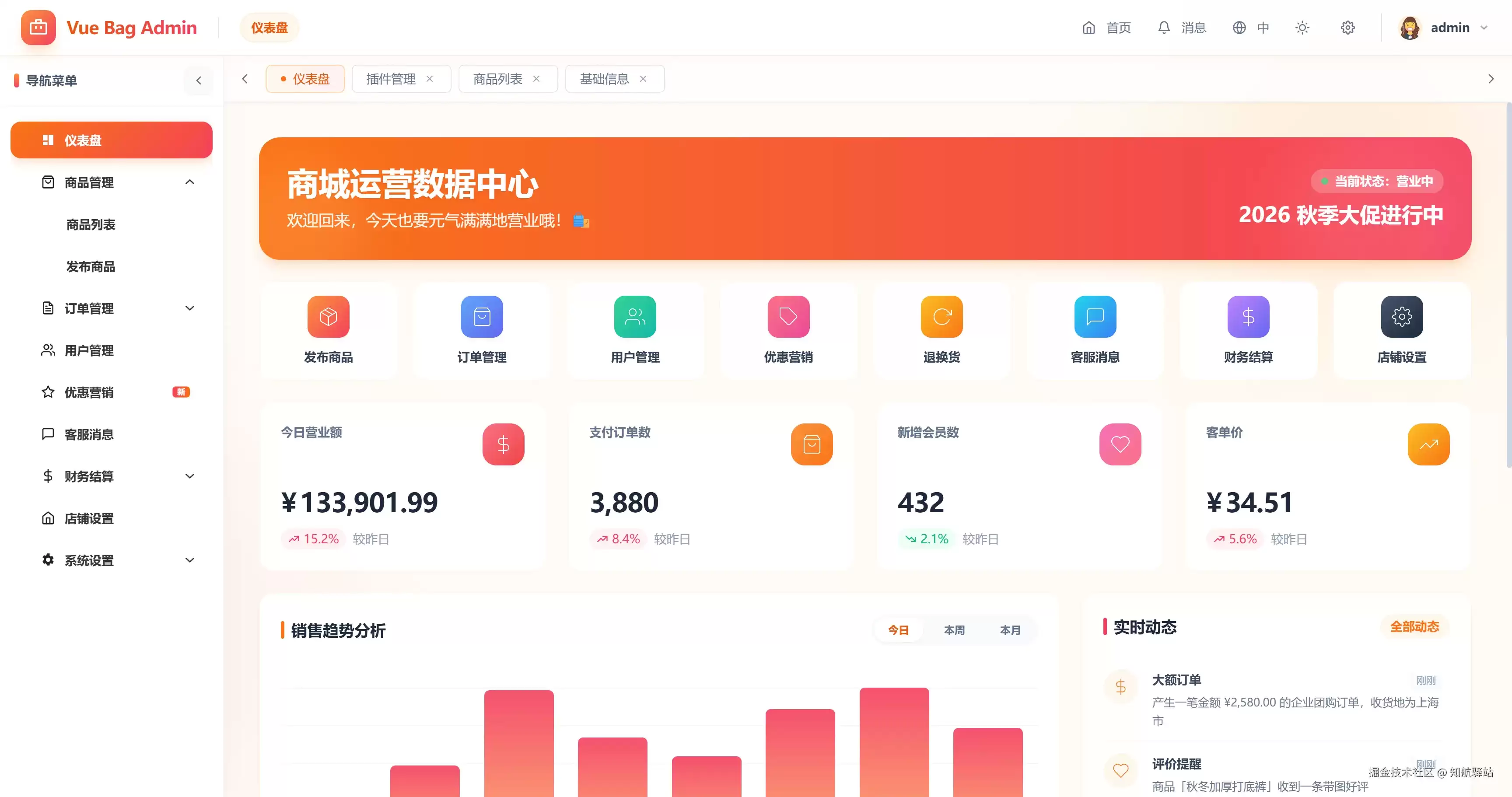
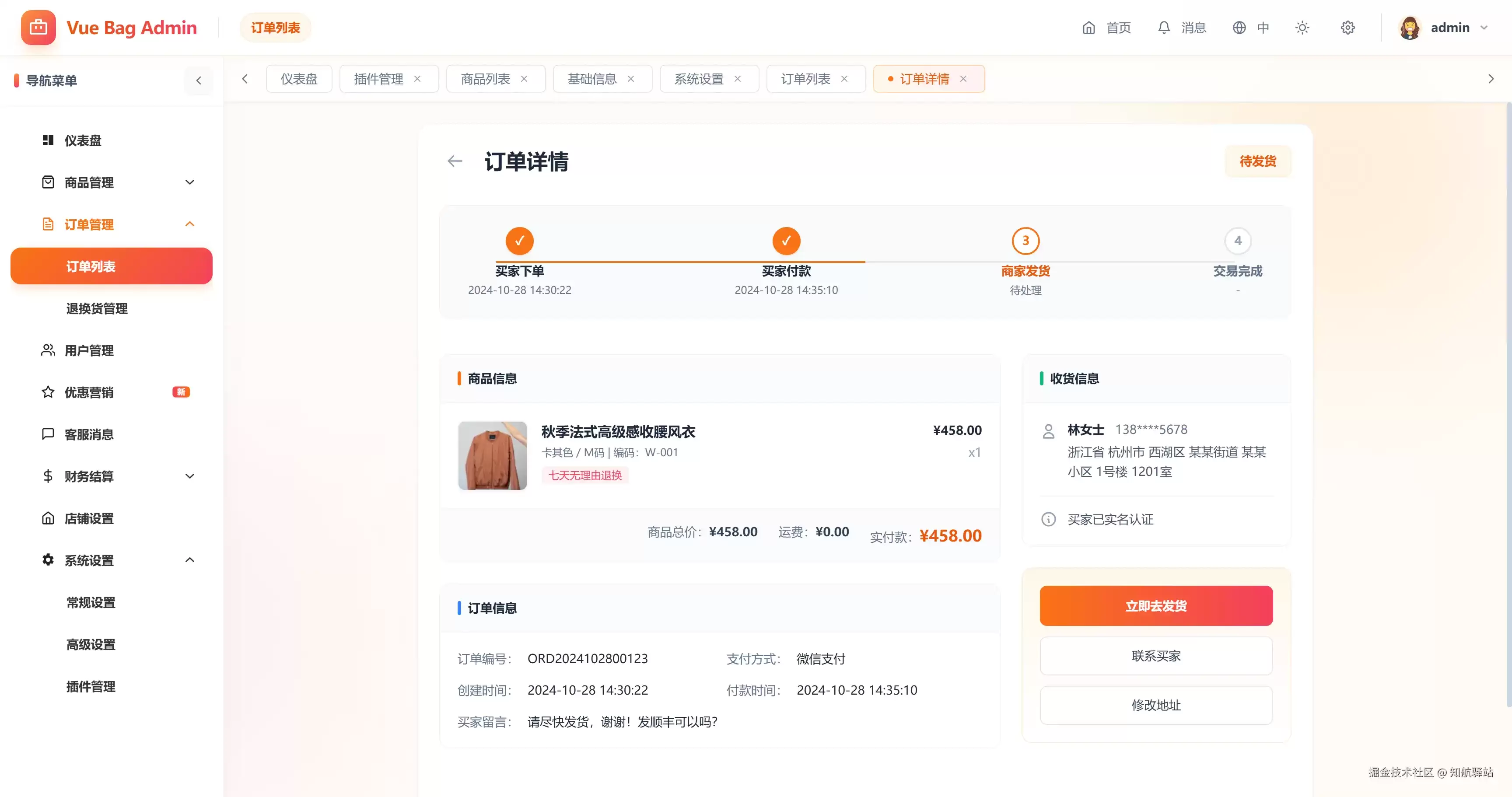
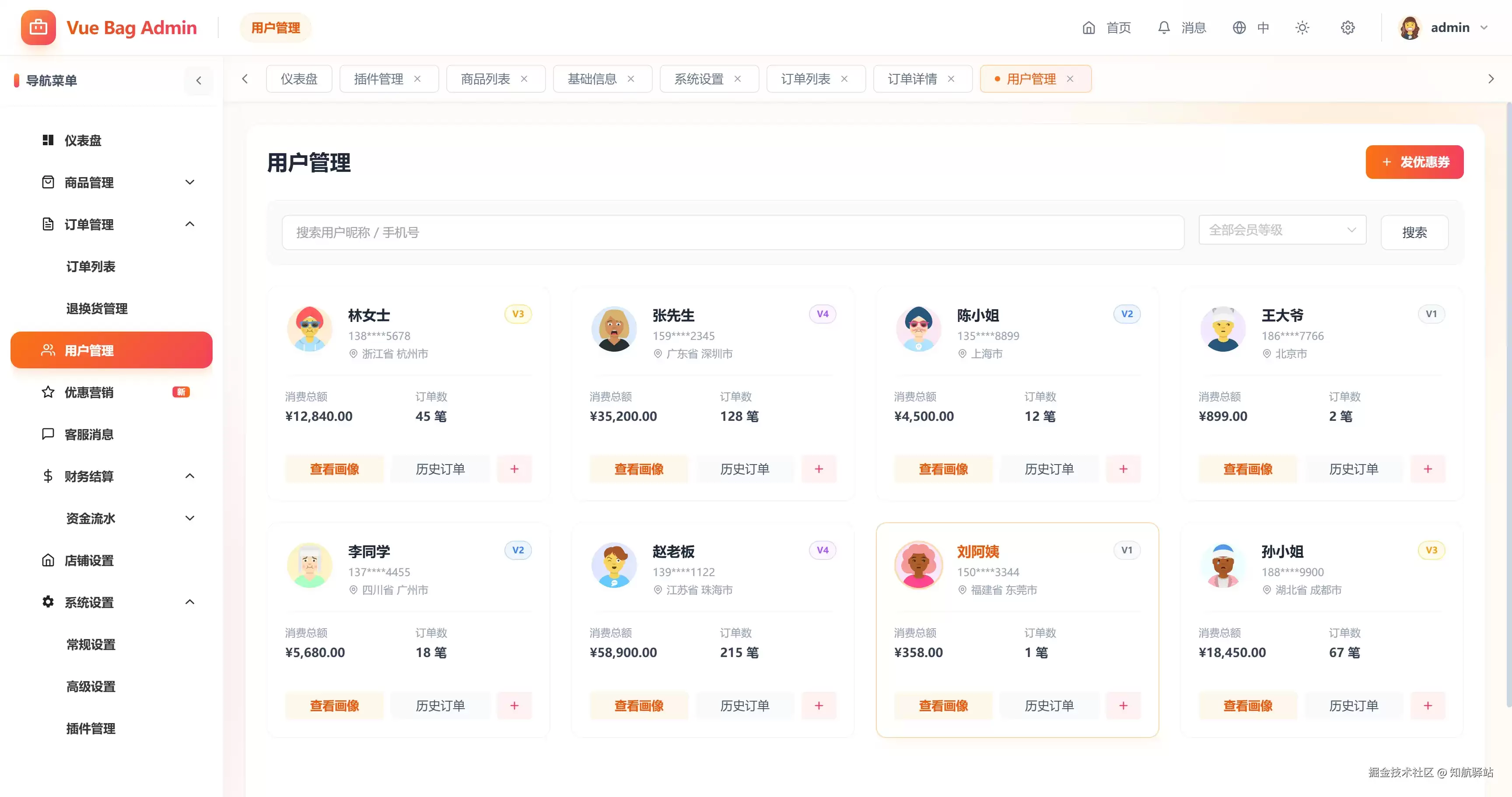
项目预览
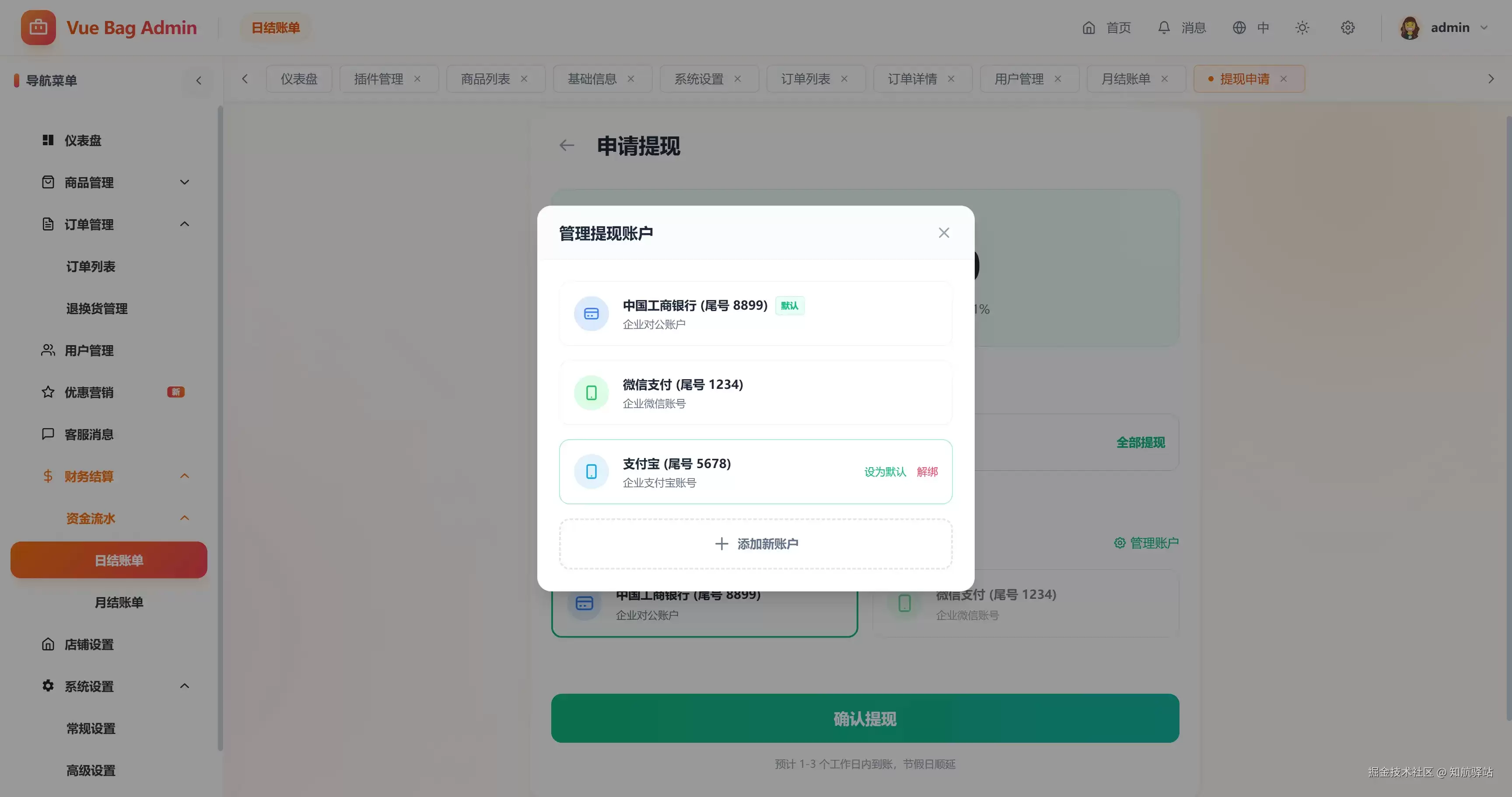
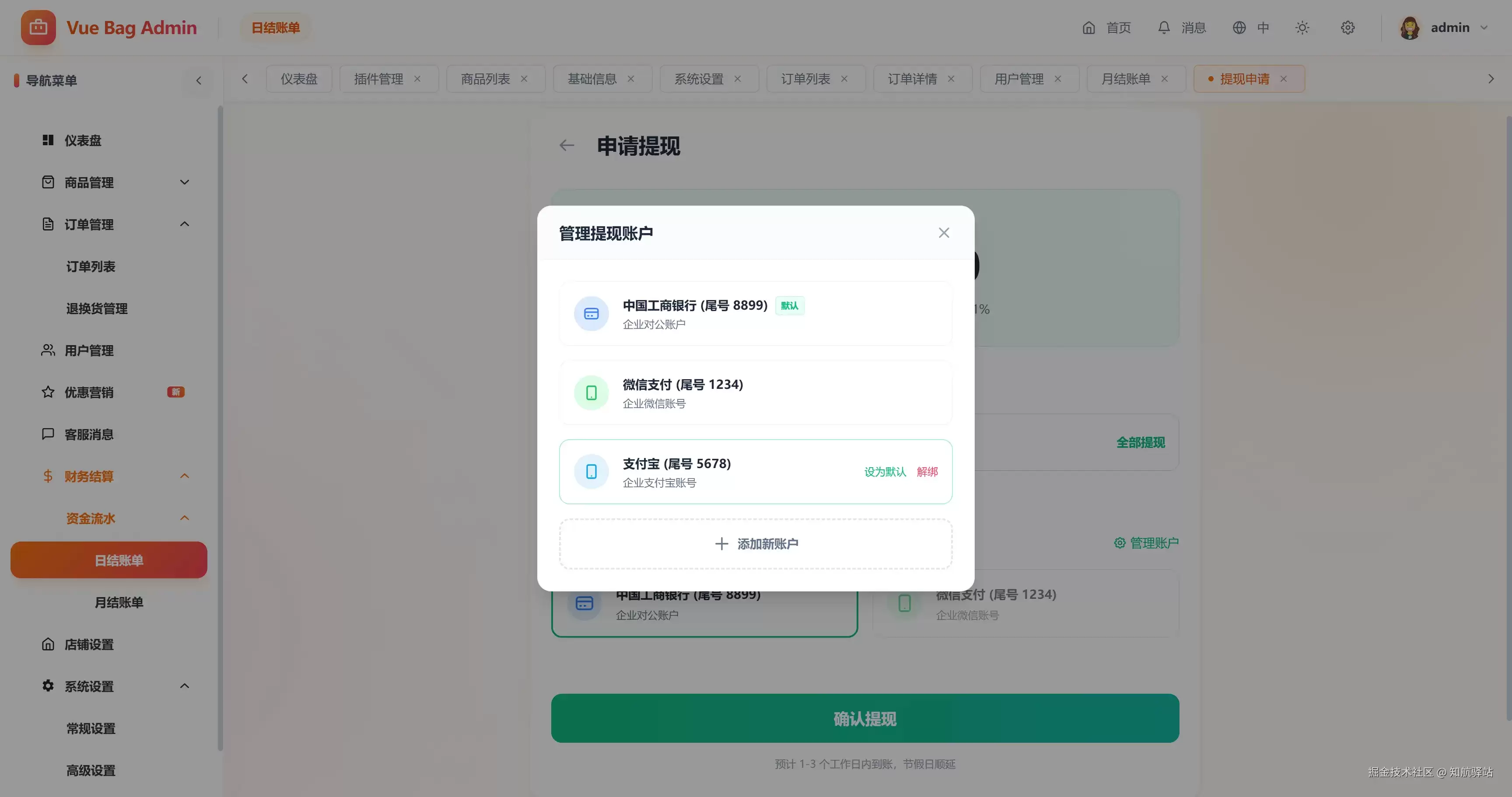
插件功能点
- 定了一套统一的插件协议,把
id、name、version、enabled、order、dependsOn、routes、menus、locales、install这些字段先收口 - 插件注册排序,用
order控制接入顺序 - 默认启用控制,通过
enabled配置插件初始状态 - 依赖声明和依赖校验,避免插件在缺少前置模块时硬挂进来
- ️ 冲突检测,主要拦重复插件
id、路由path/name和菜单path - 插件路由注册,把页面入口统一挂到宿主路由系统
- ️ 插件菜单收集,把各业务插件的导航配置汇总到宿主
- 语言包合并,让插件自己的
locales能注入到宿主 -
install钩子,方便插件做自己的初始化 - 运行时插件清单,宿主能拿到当前注册过的插件信息
- 插件启停能力,支持在运行时打开或关闭某个插件
- 启停状态持久化到
localStorage - 刷新后恢复插件状态,宿主重新引导时继续使用本地启停结果
一个插件长什么样
 复制代码const reportPlugin: AdminPlugin = {
  id: 'plugin-report',
  name: '报表插件',
  version: '1.0.0',
  order: 20,
  dependsOn: ['plugin-shop'],
  routes: [
    {
      path: '/report/list',
      name: 'ReportList',
      component: () => import('./views/ReportList.vue'),
      meta: {
        title: 'report.list',
        layout: 'default',
        permissions: ['report.read']
      }
    },
    {
      path: '/report/detail/:id',
      name: 'ReportDetail',
      component: () => import('./views/ReportDetail.vue'),
      meta: {
        title: 'report.detail',
        layout: 'default',
        permissions: ['report.read'],
        activeMenu: '/report/list',
        noCache: true,
        hidden: true
      }
    }
  ],
  menus: [
    {
      path: '/report',
      title: 'report.title',
      icon: 'chart',
      children: [
        {
          path: '/report/list',
          title: 'report.list'
        }
      ]
    }
  ]
}
这段代码最关键的地方,不是“能跑起来”,而是它把自己该交给宿主的信息一次性带齐了。宿主看到这个插件,基本就知道要把什么东西接进去。
最后
做到这里之后,我最直接的感受就是,新增一个业务模块时,接入方式终于稳定下来了。对我来说,这就够了。至少这个中后台后面继续长的时候,不会再回到什么都往宿主里塞的状态。