Java取整做法大全:Math.floor、Math.ceil、Math.rint和Math.round对比
作者:袖梨
2026-08-04
Java取整做法大全:Math.floor、Math.ceil、Math.rint和Math.round对比并不只看表面做法,关键还要理解相关条件、限制和后续影响。
1.向下取整
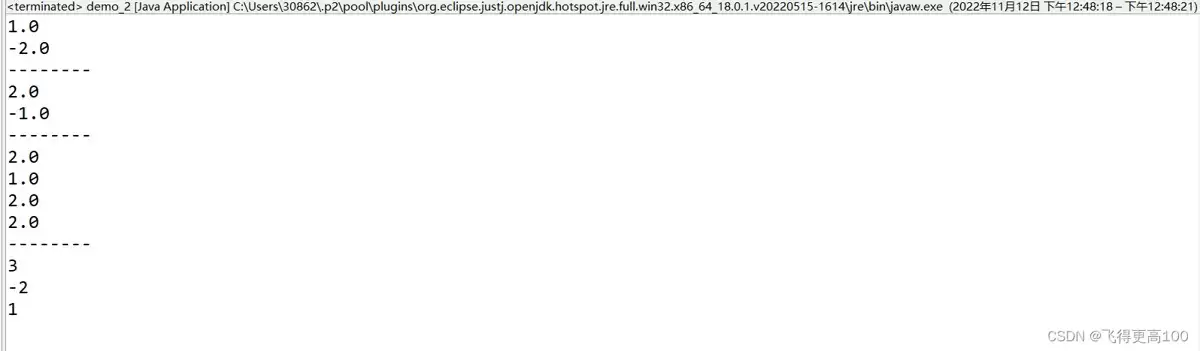
Math.floor(),向下取整就是取最小的整数,如1.9就返回值为1.0,-1.9就返回-2.0,返回的总是小于等于原数。
2.向上取整
Math.ceil(),向上取整顾名思义就是取最大的整数,如1.9就返回2.0,-1.9就返回-1.0,返回的总是大于等于原数,如图。
3.接近取整
Math.rint(),接近取整顾名思义就是接近哪个取整哪个,如1.6接近2,所以就取2;1.4接近1,所以就取1;那么1.5呢,1.5跟1和2都很接近,这时候就取偶数,如图。
4.四舍五入或(+0.5向下取整)
Math.round(),这个round就有点意思了,如果只考虑正整数的情况下就很简单,就是我们平时说的四舍五入来算就行了,如果是负数,那么的话就要负数+0.5然后再向下取整,如Math.round(-0.6) = (-0.6+0.5)=-0.1,然后向下取整就是-1,
5.类型强转(int)double,(int) float......
注意:
此种方法将会直接截取小数后面的部分,直接拿到整数。
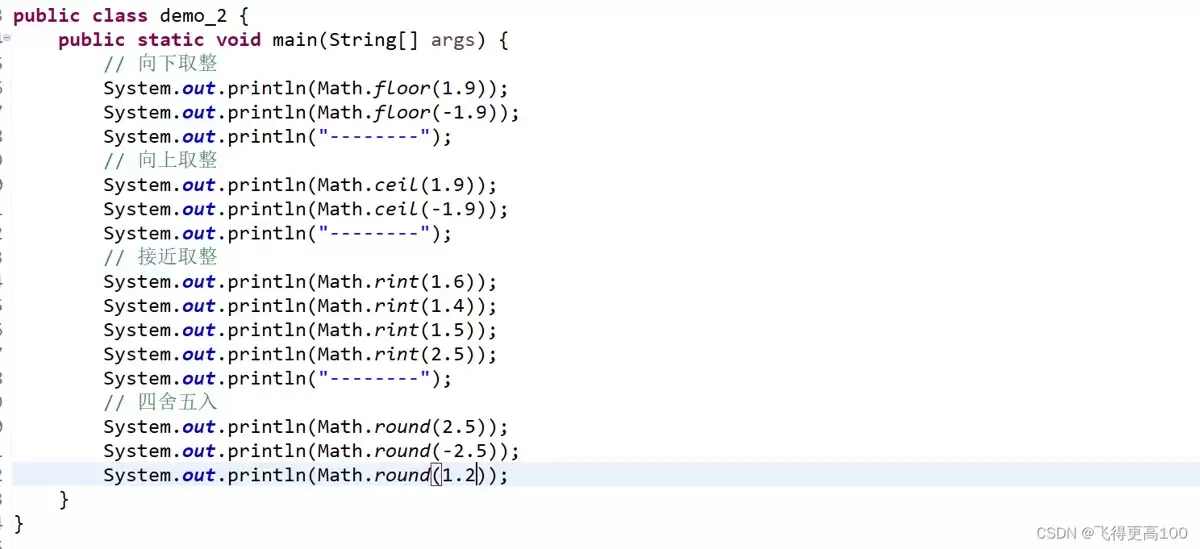
public class demo_2 {public static void main(String[] args) {// 向下取整System.out.println(Math.floor(1.9));System.out.println(Math.floor(-1.9));System.out.println("--------");// 向上取整System.out.println(Math.ceil(1.9));System.out.println(Math.ceil(-1.9));System.out.println("--------");// 接近取整System.out.println(Math.rint(1.6));System.out.println(Math.rint(1.4));System.out.println(Math.rint(1.5));System.out.println(Math.rint(2.5));System.out.println("--------");// 四舍五入System.out.println(Math.round(2.5));System.out.println(Math.round(-2.5));System.out.println(Math.round(1.2));}}总结
相关文章
-
DeepSeek多模态怎么样及保姆级配置教程(codex、claude)实用指南
游戏攻略 2026-10-17
-
WSL2+Docker+Ollama本地部署大模型思路和实践指南(Qwen1.8b)实用指南
游戏攻略 2026-10-17
-
DeepSeek Harness热门插件盘点:10个实用插件,覆盖多Agent、上下文和多模态实用指南
游戏攻略 2026-10-17
-
grep文本搜索与正则表达式完整代码示例实用指南
游戏攻略 2026-10-16
-
AI漫剧伪装直男1‑24集无雾版夸克网盘资源免费分享
游戏攻略 2026-10-15
-
AI漫剧玉僧入尘1-68集无雾无删版夸克网盘资源免费分享
游戏攻略 2026-10-15